They saw the bruises and said nothing… But a few minutes later, my father came back with the police 😱😱
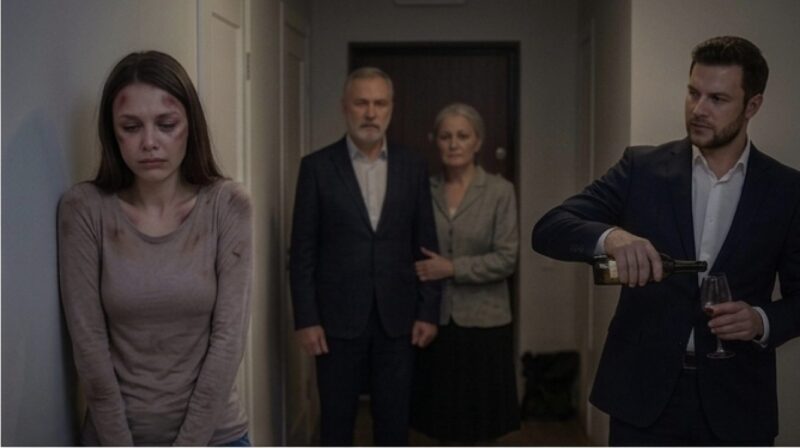
When my parents saw me standing in the doorway that night, my eyes swollen, they didn’t ask a single question. Not a word. No panic. No dramatic reaction. Just a long, painful silence that spoke volumes. My mother looked down. My father clenched his fists so tightly their knuckles turned white. Then, somehow, they went inside as if everything were normal. As if the bruise on my face was nothing more than a passing shadow. As if I were still the same girl they had dropped off at university years before, untouched by fear, untouched by shame.
I had planned everything carefully. The table was beautifully set, the candles flickered, and the aroma of roast meat filled the apartment with warmth. I wanted the evening to resemble any other family dinner. My husband, Dmitri, played his part to perfection. Freshly shaved, smelling of expensive cologne, he wore that cool, polite smile he reserved for guests. He laughed loudly, poured wine for everyone, called our little girl his “princess,” and spoke with studied charm. To anyone else, he would have seemed like the ideal husband.
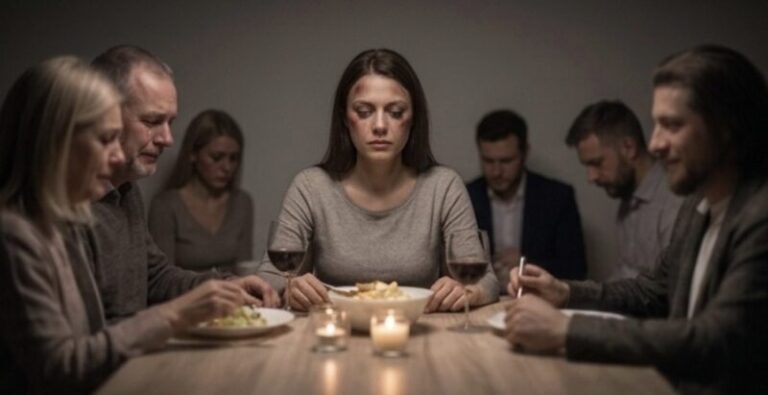
I stood there in a long-sleeved dress despite the heat, my makeup carefully applied to cover the fading bruises, hoping my parents would ignore what they were too clever not to notice. They asked small, insignificant questions. They exchanged silent glances. I knew they sensed it. I knew they understood more than I could ever admit. But they respected the wall of silence I had built around myself, perhaps hoping that I would be the one to tear it down someday.
At the end of dinner, I walked my mother to the elevator. Just before the doors closed, she leaned toward me and whispered,
“You’re not alone, Anna.”
My chest tightened so much I thought I would collapse. I nodded, but I couldn’t speak. Back inside, Dmitri had already taken off his jacket and abandoned his charm offensive. He gave me a contemptuous smile.
“Well, that was a nice little performance,” he said. “Your parents didn’t say a word. As always.”
I turned away and went into the kitchen, washing glasses in silence as my heart pounded against my ribs. I waited for the front door to stay closed, for the evening to end like all the others had—in fear, silence, and another night of survival. But fifteen minutes later, a sharp creak shattered the silence. The door swung open again. Dmitri froze. So did I. And when I looked up, I saw my father walk in first…with two uniformed police officers right behind him.
When my parents saw me at the door that evening, they said nothing. No sigh, no barrage of questions, no dramatic scene. Just a long, heavy silence filled with sadness. My mother lowered her gaze. My father’s fists clenched until his knuckles turned white. But they still went in as if everything were fine, as if the bruise on my cheek was nothing more than a fleeting shadow.
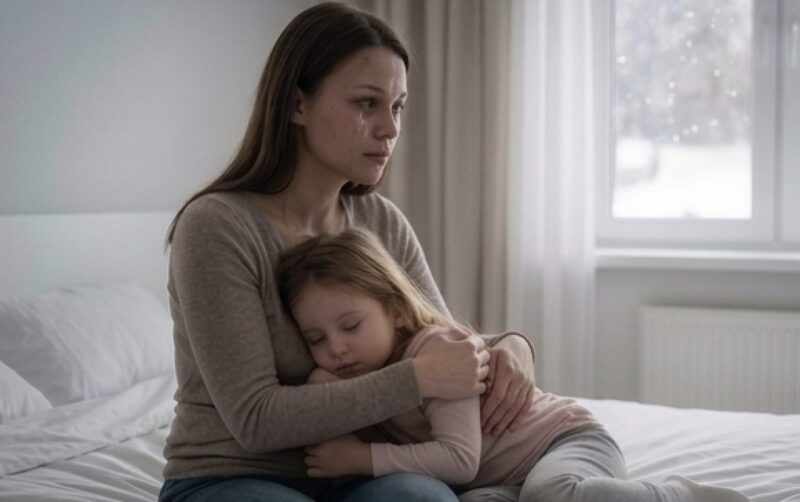
The table was already set, the candles were burning softly, and the smell of roast meat wafted through the apartment. I had tried to transform their visit into an ordinary family dinner. Dmitri, my husband, had shaved, put on cologne, and displayed the cold, polite smile he reserved for strangers. He laughed loudly, called our daughter his “little princess,” and poured the wine with mocking generosity. I stood straight, my makeup carefully concealing the marks, my long sleeves covering what could not be explained.
My parents asked a few insignificant questions and exchanged discreet glances. I knew they suspected something. I knew they sensed it. But they respected the wall of silence I had built, perhaps hoping that one day I would tear it down myself. When they left, I walked my mother to the elevator. She leaned forward and whispered,
“You’re not alone, Anna.” “
I nodded, my heart pounding too hard for words. Inside, Dmitri had already taken off his jacket and dropped his mask.
“Well, that was quite a performance. Your parents didn’t say a word. As usual.”
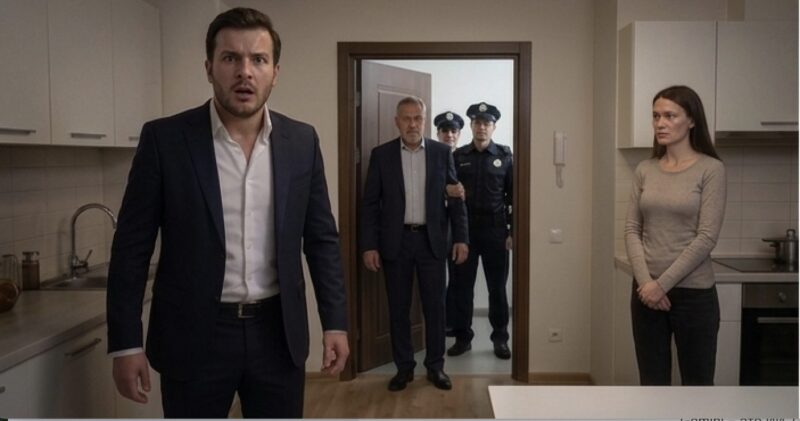
I went back to the kitchen and washed the dishes in silence. My fear drifted into that familiar state of numb exhaustion, the kind that feels almost like surrender. Then, fifteen minutes later, the silence shattered with a sudden, sharp crack. Dmitri froze. So did I. The front door opened again. My father went in first, followed by two uniformed police officers.
“Dmitri Pavlovich, you must come with us,” an officer said. My husband stood motionless for a second of shock before turning to me in a rage.
“What have you done, you idiot?”
I didn’t answer. My father didn’t answer either. He watched me from the doorway with a calm certainty in his eyes, the same quiet strength he had when I was a child and he used to pick me up from school. Dmitri screamed and struggled, but the officers forcibly took him away. The door slammed shut. Peace returned. I lay motionless, unable to breathe properly, my heart pounding in my chest. My mother came quietly back into the apartment, touched my shoulder, and whispered,
“It’s over, darling. We’re here.”
That’s when I finally allowed myself to cry. The days following Dmitri’s arrest were strangely peaceful. For the first time in years, I slept without waking in terror at the slightest noise. My stomach was no longer in knots. My daughter, Sofia, was playing more freely, as if she too sensed that the atmosphere had changed. But the peace didn’t last. A week later, I received a call from an unknown number. I made the mistake of answering.
“You think you’ve won?” It was Dmitri. His voice was calm, cold, venomous.
“You’re proud, aren’t you? Playing the martyr in front of everyone. You really think they’re going to keep me here? I’m going out, Anna. And believe me, I won’t forget.”
My hand was shaking so badly I almost dropped the phone. He never needed to shout to terrify me. His low voice was always worse. I went straight to the police and played them the recording. This time, I told them everything. They warned me to be careful and promised to seek a restraining order. In the days that followed, I took Sofia to my parents’ house, changed the locks, and let a neighbor help me install security cameras. I also contacted an organization that helps women who are victims of violence, and for the first time, I told the whole truth without shame. Something inside me began to change.
Then, one evening, as I was closing the curtains, I saw a man standing under my window. I didn’t need to see his face. My heart knew before my mind. It was Dmitri. I called the police immediately.
“Dmitri Pavlovich is violating the court order. He’s here. Send someone now.”
This time, it wasn’t me who was trembling. It was him who froze when the flashing lights illuminated the street and he realized that I was no longer alone, no longer silent, and no longer willing to die for a lie called love. It wasn’t the end of my struggle, but it was the beginning of my freedom.
Later, after a final act of violence landed me in a hospital bed with broken ribs and a swollen face, I understood the whole truth. Love doesn’t excuse cruelty. Forgiveness doesn’t protect the innocent. Silence doesn’t save a family. I testified. I gave every recording, every photo, every memory. Dmitri was sentenced to prison, and a lengthy restraining order protected Sofia and me.
Months later, in a small, bright apartment, I watched my daughter sleep peacefully, a teddy bear in her arms. I stroked her hair and whispered into the quiet room:
“You’ll never experience what I went through. Never again.”
Outside, snow was falling on the city. It was still winter. But deep down, I already knew that spring would come.